

Reduce Swelling, Support Recovery and Improve Circulation
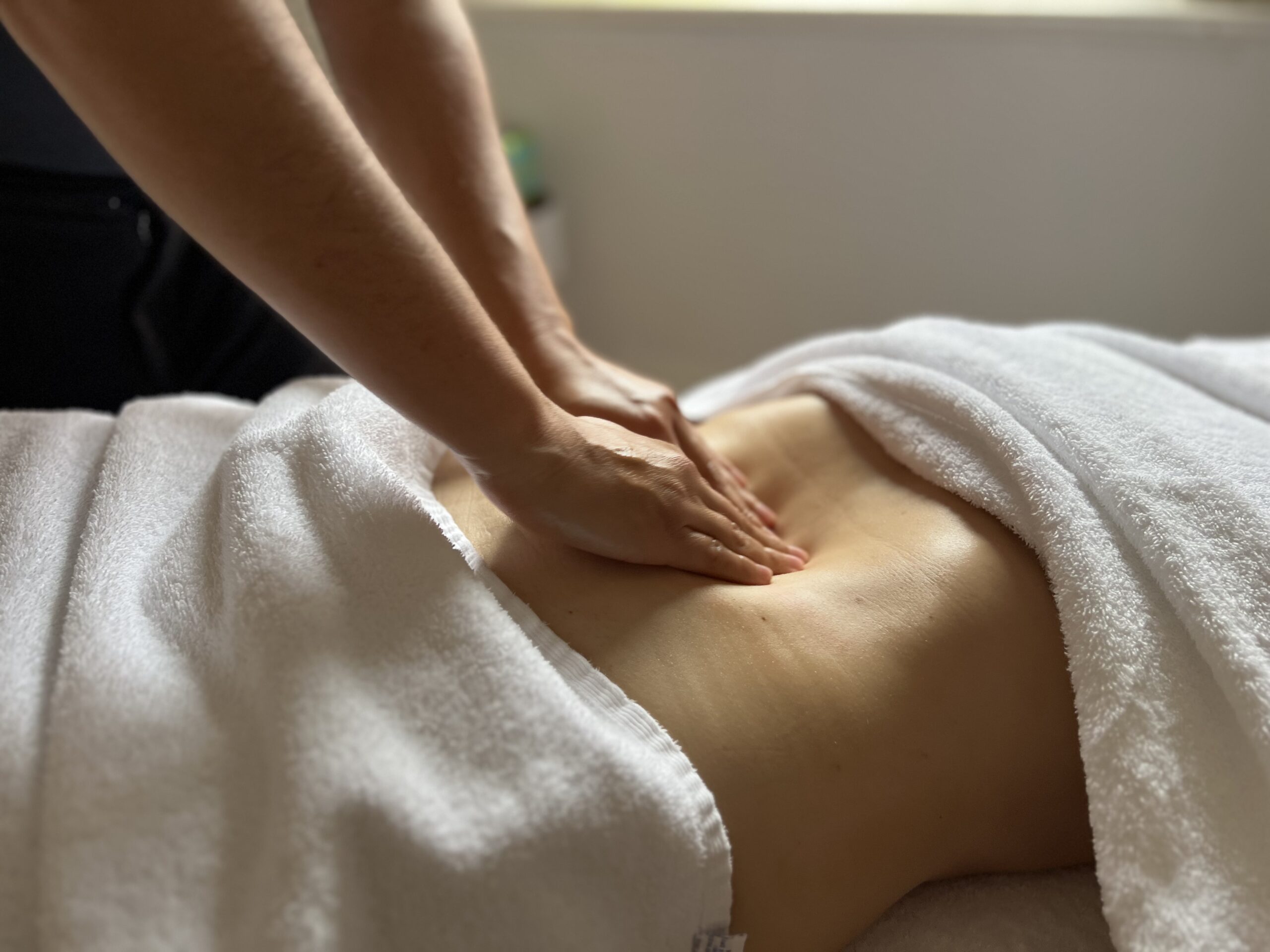
Manual Lymphatic Drainage (MLD) is a gentle, specialised treatment provided within the scope of remedial massage. At Sandy Bay Massage, this therapy is commonly used to support fluid balance, reduce swelling and assist recovery following injury, surgery or inflammation.
Your lymphatic system plays an essential role in circulation, immune function and tissue health. When fluid movement slows, swelling, heaviness or congestion can develop. Manual lymphatic drainage helps restore natural flow through safe, controlled techniques.
This guide explains what happens during treatment, what to expect afterwards and how to support your results between sessions.
What Is Manual Lymphatic Drainage
Manual lymphatic drainage is a specialised form of remedial massage that uses slow, rhythmic movements to stimulate lymph flow just beneath the skin.
Unlike deep tissue massage, the pressure is:
- Light
- Gentle
- Rhythmic
- Directional
The goal is not to push fluid forcefully, but to guide it through natural pathways toward lymph nodes where it can be processed by the body.
Understanding How Lymph Flows in Your Body
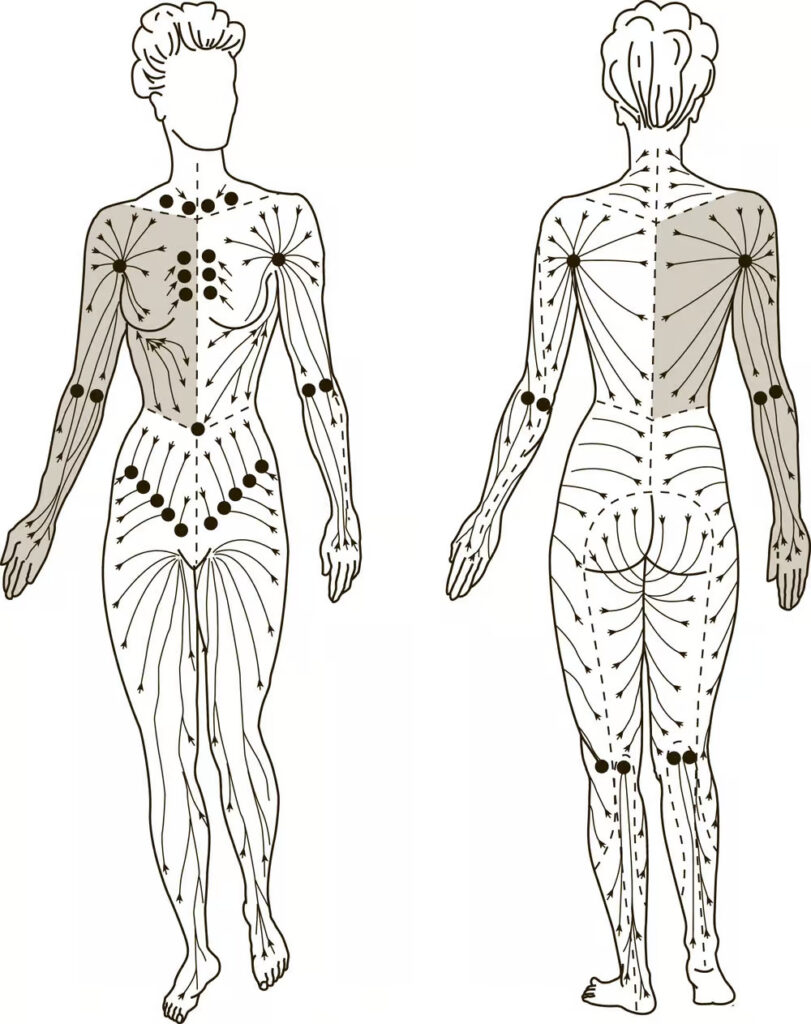
The image shows how lymph fluid moves through the body.
Arrows represent the direction of lymph flow.
Dots represent major lymph node groups.
Fluid naturally travels toward the:
- Groin
- Neck
- Armpits
- Abdomen
This is why treatment often begins closer to the centre of the body before working on the swollen area. Preparing these pathways allows fluid to move more efficiently and safely.
You can use this same principle when performing gentle self-care between treatments.
How to Perform Gentle Self-Massage at Home
If your therapist has recommended self-care between sessions, these simple guidelines help keep the technique safe and effective.
Always follow these principles:
- Work in the direction of lymph flow
- Begin closer to the centre of the body first
- Use very light pressure
- Keep movements slow and rhythmic
- Avoid deep or forceful massage
The lymphatic system sits just under the skin. Strong pressure can actually slow flow rather than improve it.
Example: Self-Massage for Leg Swelling
If you have swelling in the legs:
- Begin gently stimulating the abdomen
- Then stimulate the groin area
- Move down the leg
- Guide fluid back upward toward the groin
The goal is to prepare the pathways first, then encourage fluid movement through those open channels.
This approach is more effective than massaging directly into the swollen area without preparation.
Your therapist can demonstrate simple techniques specific to your condition during your session.
Common Reasons Clients Seek Lymphatic Drainage
Manual lymphatic drainage is commonly used to support:
- Fluid retention
- Swelling in legs, arms or face
- Lymphoedema
- Post-surgical recovery
- Bruising and inflammation
- Sinus congestion
- Bloating
- Migraines
- Fatigue or chronic pain conditions
These are among the most frequent presentations seen in clinical remedial practice.
What Happens in Your Body During Treatment
During treatment, lymph flow is stimulated to assist the movement of:
- Excess fluid
- Metabolic waste
- Inflammatory by-products
This may help:
- Reduce swelling
- Improve circulation
- Support tissue healing
- Promote relaxation
Manual lymphatic drainage also supports the parasympathetic nervous system, helping the body shift into recovery mode.
What You May Notice After Your Treatment
Your body continues processing fluid movement after the session. This is normal.
You may notice:
- Increased urination
- Thirst
- Reduced swelling
- A feeling of lightness
- Mild fatigue
- Digestive activity
These responses usually settle within 24 to 72 hours.
They reflect the body restoring fluid balance.
How to Support Your Results After Treatment
Small daily habits make a meaningful difference.
Helpful strategies include:
- Drink water regularly
- Walk or move gently
- Practice slow, deep breathing
- Avoid excessive salt immediately after treatment
- Limit alcohol on the day of treatment
These actions help maintain healthy lymph flow.